

 Back
Back

Arbat Fine Art Gallery presents an English translation of Elena Yukhimenko’s article “The Rediscovered Shrine: The Gift of S. Yu. Nikolaev to the State Historical Museum” published in the journal Antiquariat, Predmety Iskusstva i Kollektsionirovaniya (Antiques, Art Objects, and Collecting). The article tells the story of the icon of the Savior of Moskvoretsky, which we discovered and which has become one of the most significant discoveries in the field of Russian art in the 21st century.
Among the especially venerated miraculous images of Moscow from the 17th to the first third of the 20th century was the icon of the All-Merciful Savior, located in the Moskvoretsky Chapel specially built for it near the Moskvoretsky Bridge.
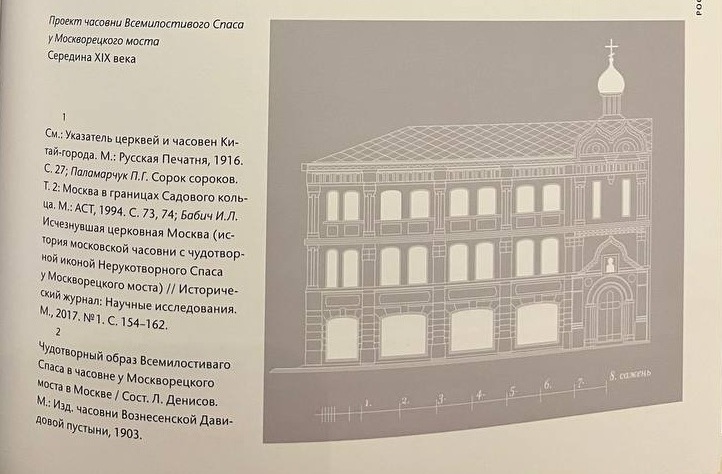
The miraculous image of the Savior was originally placed, apparently, in a special niche on the Kitay-gorod wall, where the Moskvoretsky Gates with passages similar to those of the Voskresensky Gates were located. In 1685-1689, a wooden chapel was built outside the gates for the icon, which at that time belonged to the Zosimo-Savvatievsky Marchugovsky Hermitage near the town of Bronnitsy, and in 1700 the chapel was transferred to the Solovetsky Monastery; in 1709, it was moved inside the walls of Kitay-gorod. Under Peter I, it was closed, but in 1727 it was restored. In 1765, the Chapel of the All-Merciful Savior was transferred to the Davidova Hermitage in Serpukhov District. In the 19th century, the building was significantly rebuilt, and in 1912, through the efforts of benefactors, the interior was renovated. The chapel was located at 29 Moskvoretskaya Street – the second-to-last building on the odd-numbered, left side of the street from Red Square, near the Moskvoretskaya Embankment (now the territory of Zaryadye Park). The chapel was closed in the 1920s, and the building was demolished in 1966 before the construction of the Rossiya Hotel.
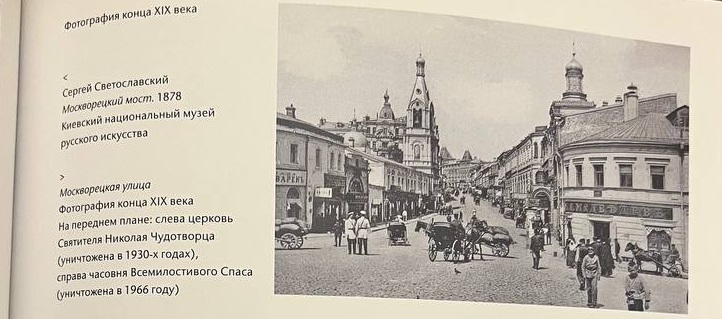
The icon of the Savior, placed in the chapel near the Moskvoretsky Bridge, was one of the six especially venerated Moscow images. It was considered ancient. Art historian and researcher of Russian monasteries Leonid Denisov clarified this broad dating. In a special brochure, he noted that “the antiquity of this venerated icon dates back no earlier than the middle of the 17th century”. The image from the chapel was also dated to the 17th century by such a connoisseur of Moscow as M. I. Aleksandrovsky.
Evidence of the veneration of the image and the miracles associated with it was collected in a 1903 brochure: “Among the great shrines found in Moscow, the ancient miraculous image of the All-Merciful Savior enjoys special reverent veneration among Orthodox Russians. It is located in the chapel near the Moskvoretsky Bridge”. A special section of the publication contains a detailed narrative about the miracles of the Moskvoretsky Savior: “Miraculous healings received through the prayers of the sick before the miraculous image of the All-Merciful Savior”. Leonid Denisov noted that “miraculous healings through prayer before the miraculous image of the All-Merciful Savior, located in the chapel near the Moskvoretsky Bridge, have been received by believers since ancient times”, but since detailed records of healings were not kept, the author limited himself to describing “two officially attested facts of miraculous healings that occurred in recent times”: the healing of Anna Kaptsova, the daughter of a peasant from the village of Rumyantsevo, Sokolovskaya Volost, Epifan District, Tula Province, from an eye disease in 1889, and the healing of Maria Sapozhnikova, a merchant’s daughter from the town of Shatsk, Tambov Province, from “mental disorder” in 1890. These two cases show that the fame of the healings from the icon spread far beyond the borders of the ancient capital.
Muscovites held this shrine in great reverence. They would “invite” it to their homes. Just as with the Iverskaya Icon of the Mother of God from the Iverskaya Chapel at the Voskresensky Gates, church servants would visit the homes of Muscovites. Solemn processions with the cross, or “translations”, of the icon to other churches were carried out, for example, to the Church of St. Nicholas in Tolmachi. In the 1903 brochure, when describing cases of miraculous healing “received through the prayers of the sick before the miraculous image of the All-Merciful Savior”, it is noted that a resident of Shatsk, who occasionally lived in Moscow, “had heard that the sick had repeatedly received healing from the icon of the Savior in the chapel near the Moskvoretsky Bridge”. At the end of the 19th and beginning of the 20th centuries, copies of the icon – both analogion-sized and smaller – were made from it in the form it was in at the time (under the darkened varnish and recording?), and in some cases, they bore the inscription: “The miraculous image of the Savior located in the chapel near the Moskvoretsky Bridge in Moscow”.
The copies of the icon, as well as the lithograph published in the 1903 brochure, indicate that the miraculous image of the Savior belonged to a special iconographic tradition: a bust-length depiction of the Savior, with His right hand in a blessing gesture and His left hand holding an open Gospel. This tradition was named the Moskvoretsky type.
The original icon was described in Act No. 462 of the inspection of the chapel by the Church Group of the Artistic Subdivision of the Moscow Department of Public Education on January 3, 1921: “The icon of the All-Merciful Savior in a silver-gilt riza, painted in the mid-17th century, measuring 2¼ arshins × 1¾ arshins”. Despite its brevity, this entry contains extremely important information: the dating to the mid-17th century, the mention of a riza covering, and the specific dimensions – 160 × 124 cm (1 arshin = 0.711 m).
In 1927, the icon of the All-Merciful Savior was still listed in the inventory of the chapel near the Moskvoretsky Bridge, which was then affiliated with Moscow’s Sretensky Monastery: “Icon of the All-Merciful Savior. 2¼ arshins × 1¾ arshins (registered in the Historical Museum)”. The last known record of the shrine dates to September 15, 1927, when the chief curator of the Historical Museum, Alexey Vasilyevich Oreshnikov, saw the icon and wrote in his diary: “We were in the restoration workshop (in the Pokrovsky Cathedral on Red Square – E.Y.), where a huge miraculous image of the Savior from the chapel is being cleaned; the painting is amazing”.
The further fate of the image of the Savior from the Moskvoretsky Chapel remains unknown. I. L. Babich, who conducted special searches, was unable to find either later records of this icon in the archives or the icon itself in major museum collections.
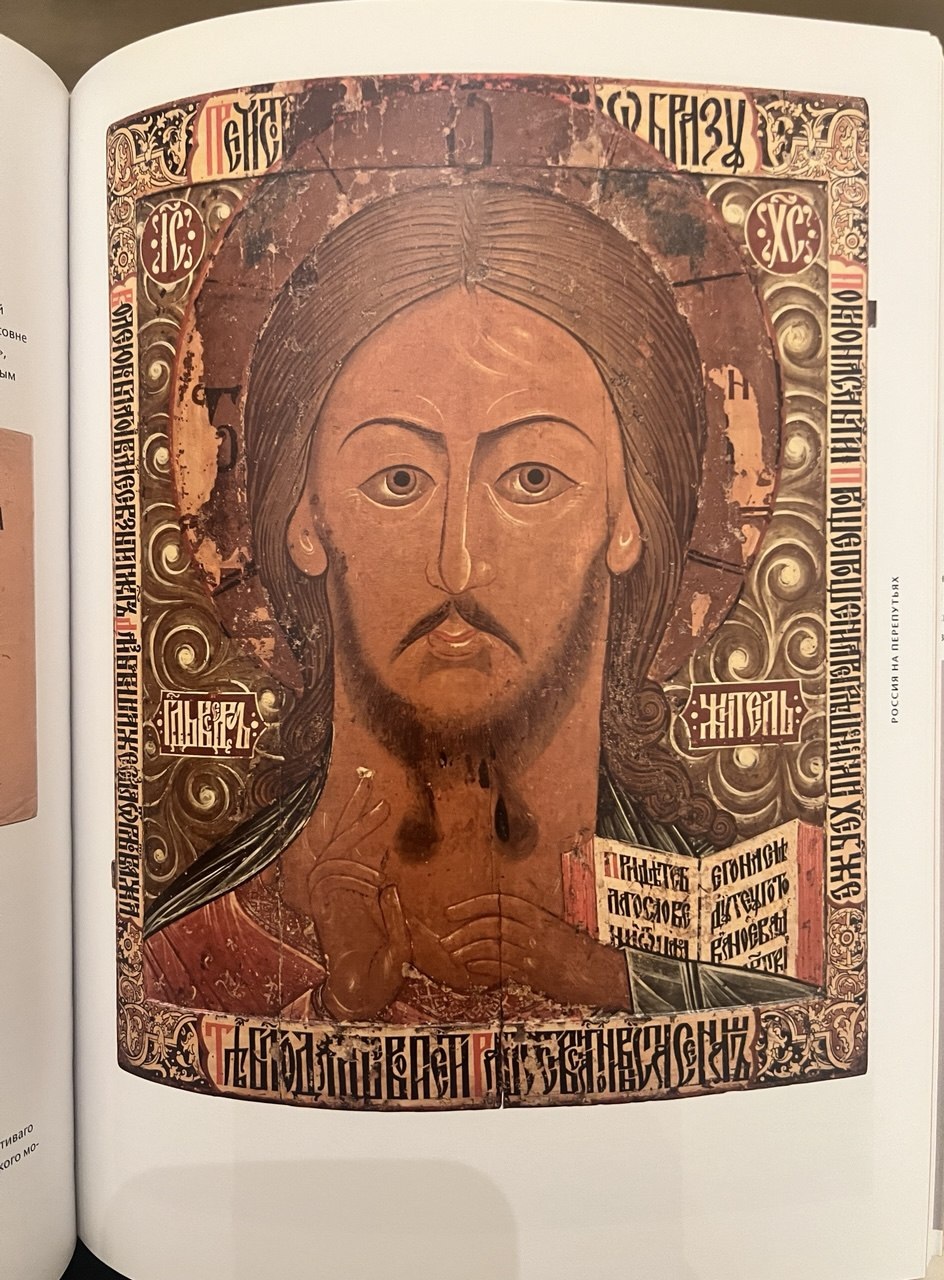
In 2018, a monumental image of the Savior appeared on the antique market; it was acquired by the well-known collector Stanislav Yuryevich Nikolaev.
A restoration of the icon was carried out (with the complete removal of the solid overpainting and darkened varnish), which revealed the original image of the Savior – an image that is quite possibly the very lost shrine in question. This is indicated by the following circumstances:
- Belonging to the same Moskvoretsky iconographic tradition of the Savior’s depiction;
- Nearly identical dimensions (accounting for measurement inaccuracies in quarters of an arshin in the 1921 act): 150 × 125 cm;
- Traces of numerous small nails on the background of the icon, used to secure the riza (metal covering);
- Clear signs of burns located below the face of the Savior, evidence of the veneration of this specific image, to which various oil lamps were repeatedly suspended;
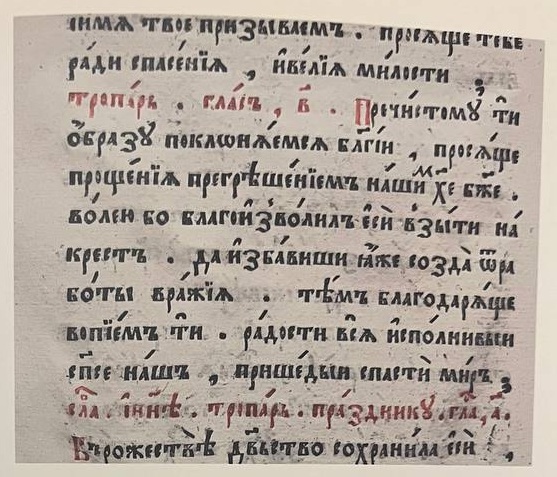
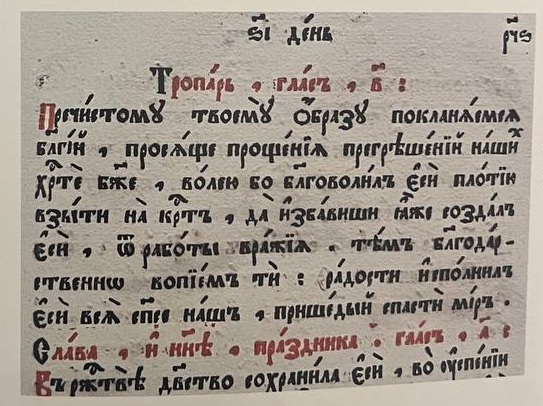
- The dating of this icon does not extend beyond the mid-17th century, directly confirmed by the presence of a troparion text written in the margins of the icon. This text, in the 2nd tone, is part of the service for the Feast of the Holy Mandylion (Not-Made-by-Hands Image of the Savior) on August 16 (Old Style), and it is in the “pre-schism” (pre-Nikon) version.
Let us compare these texts, highlighting in color the obvious differences in grammatical forms that appeared after the “book correction” (liturgical reforms):
| Inscription on the icon | Service Menaion (August), 1630 | Service Menaion (August), 1691 |
|---|---|---|
| Пречистому [Ти] Образу / Поклоняемся благии, Просяще прощения прегрешением нашим, Христе Боже / Волею бо благоизволил еси взыти на крестъ. Да избавиши яже созда от работы вражия / Тем благодаряще вопием ти радости вся исполнивый спасе нашъ. | Пречистому Ти образу поклоняемся благии, просяще прощения прегрешениемъ нашим, Христе Боже. Волею бо благоизволилъ еси взыти на крестъ. Да избавиши яже созда от работы вражия. Темъ благодаряще вопием ти, радости вся исполнивый, Спасе нашъ. | Пречистому Твоему образу поклоняемся благий, просяще прощения прегрешений наших, Христе Боже, волею бо благоволил еси плотию взыти на крестъ, да избавиши яже создалъ еси от работы вражия Темъ благодарственно вопием ти, радости вся исполнилъ еси вся, Спасе нашъ. |
It is absolutely clear that the inscription on the icon literally matches the printed text of the 1630 and 1646 editions, and the appearance of such a text on an icon after the church reform that began in 1654–1656 would have been impossible.
A. V. Oreshnikov, who witnessed the initial restoration of the icon, noted its “amazing painting”. This description is fully applicable to this monument, whose unique feature is the liturgical text executed in large calligraphy, occupying almost the entire margin area. Together with the ornamental compositions accentuating the corners, this gives the icon an exceptional and rare decorative quality.
In terms of stylistic execution, the icon should be attributed to the work of a professional northern icon painter. The northern origin of the newly discovered image does not contradict the assumption of its possible location in the chapel near the Moskvoretsky Bridge. Let us recall that this chapel originally belonged to the Zosimo-Savvatievsky Marchugov Hermitage. According to P. M. Stroev’s classic reference, this hermitage was founded in 1653 in Moscow, near Krasny Holm (modern-day Krasnokholmskaya Embankment, a little over two kilometers downstream from the Moskvoretskaya Embankment) by Archpriest Stefan Vonifatyev of the Annunciation Cathedral in the Moscow Kremlin, who was also the spiritual advisor to Tsar Alexei Mikhailovich. In 1656, due to flooding, the hermitage was relocated to the village of Faustovo near Bronnitsy. As a major donor to the Solovetsky Monastery, Stefan Vonifatyev could well have obtained such a monumental icon from the North for his monastery. It is noteworthy that in 1700, both the Marchugov Hermitage and the chapel near the Moskvoretsky Bridge were transferred to the Solovetsky Monastery.
Thus, there are sufficient grounds to assert that the newly discovered icon “Lord Almighty” (Savior of Moskvoretsky) is indeed the very same venerated image that was kept in the chapel near the Moskvoretsky Bridge.
However, even apart from this assumption, this icon – created in the second quarter of the 17th century – stands out for its highest artistic merits, the power of its emotional impact, and its rare decorative quality for its time, making it a unique monument of Old Russian painting and an object of undeniable museum, historical, and collectible significance.
The results of our research have influenced the further fate of the icon: Stanislav Yuryevich Nikolaev made the exceptionally noble decision to make this rediscovered shrine accessible to all. We gratefully note that the collector has made generous donations before: in 2017, he gifted the Historical Museum a rare painted portrait of the Old Believer monk Pavel Belokrinitsky from the third quarter of the 19th century; in 2019, he donated to the Yaroslavl Art Museum a collection of creative materials by the artist, art historian, and museum worker P. I. Neradovsky (1875–1962), including 14 of his watercolors and drawings, documents, family photographs from the pre-revolutionary and Soviet periods, a photo album of his works held in various museums, and a plaster bust – a total of about 30 items.
The choice of the State Historical Museum as the permanent home for the rediscovered shrine was determined, above all, by the fact that the Intercession Cathedral (St. Basil’s Cathedral) is part of the museum’s structure. It is located closest to the historical site of the miraculous icon – the Chapel of the All-Merciful Savior near the Moskvoretsky Bridge – and serves as both a museum and an active church (services in the lower Church of St. Basil the Blessed are held once a week, on Sundays). Here, this unique image of the Savior will once again be accessible to all who wish to see it.

