

 Back
Back

Ancient Roman painting primarily begins during the Imperial era – since, according to one viewpoint, the Republic sought not contemplative understanding of the world but practical mastery over it. However, the explanation might be simpler: it appears that only those works of art have survived that were expensive and commissioned by high-ranking individuals. It is logical to assume that during the more austere and egalitarian Republic, works of art were simpler, less durable, and, consequently, their preservation was less rigorously maintained. The luxury of the Imperial period, on the other hand, was better protected and created using higher-quality and more costly materials.
This school is underappreciated today, but its study is of great importance, as it shows us the transition from ancient art to medieval religious art. It is precisely through the study of the Ancient Roman school and early Christian art that we can understand the genesis of European religious painting. Easel painting from Ancient Rome has not survived, although it is known from historical sources. However, the surviving examples are mainly frescoes.
We know some names of ancient Roman artists, such as Gaius Fabius Pictor, but their works have not survived, or we lack sufficient grounds to attribute existing works to them. There are exceptions – for example, the artist Ludius is sometimes credited with the frescoes in the Casa della Farnesina.
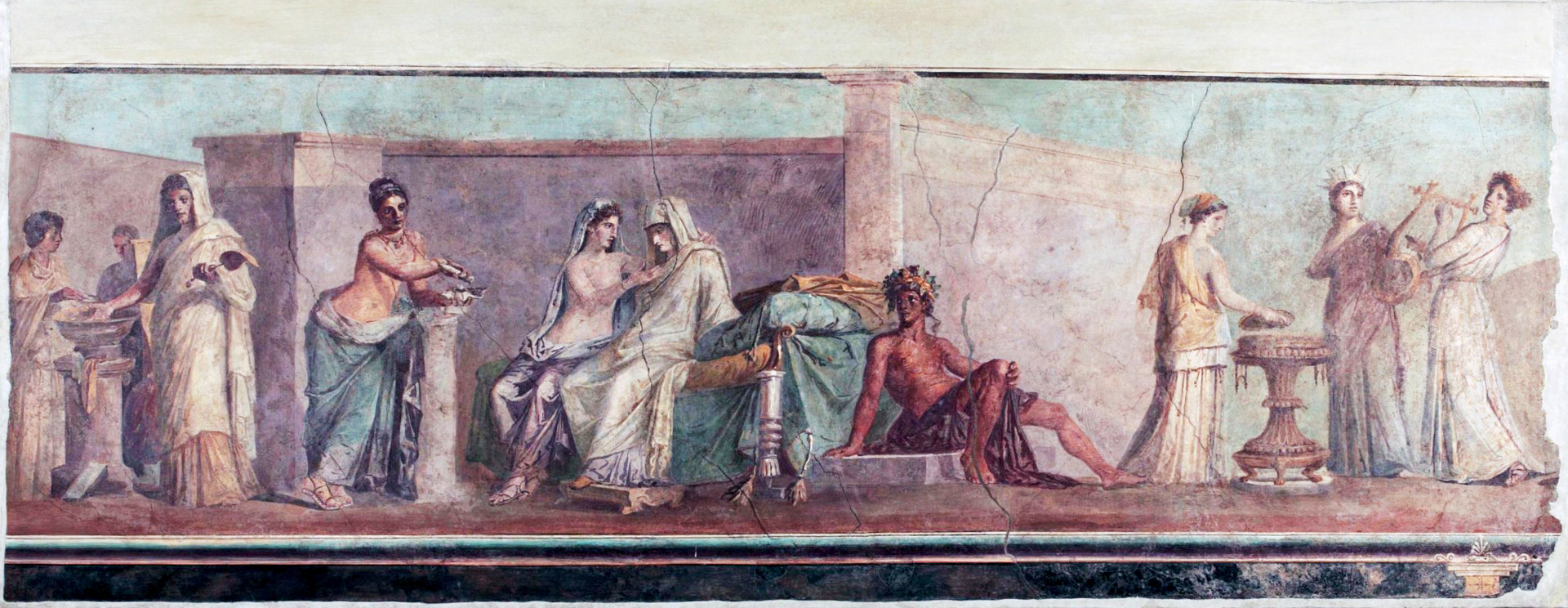
One of the earliest and most famous surviving works of ancient Roman painting is the Aldobrandini Wedding. This ancient fresco was discovered in 1601 in Rome, on the Esquiline Hill near the Arch of Gallienus, where the Gardens of Maecenas once stood. It is arguably the pinnacle of painting from its period and dates to the second half of the first century BCE – precisely the time of the Republic’s decline and the establishment of the Empire. Compared to, for example, Etruscan painting, it represents an entirely new artistic level. There are various interpretations of its subject, which remains unclear to this day, but many note the influence of Hellenism in it (it is likely a copy of an earlier Greek original).
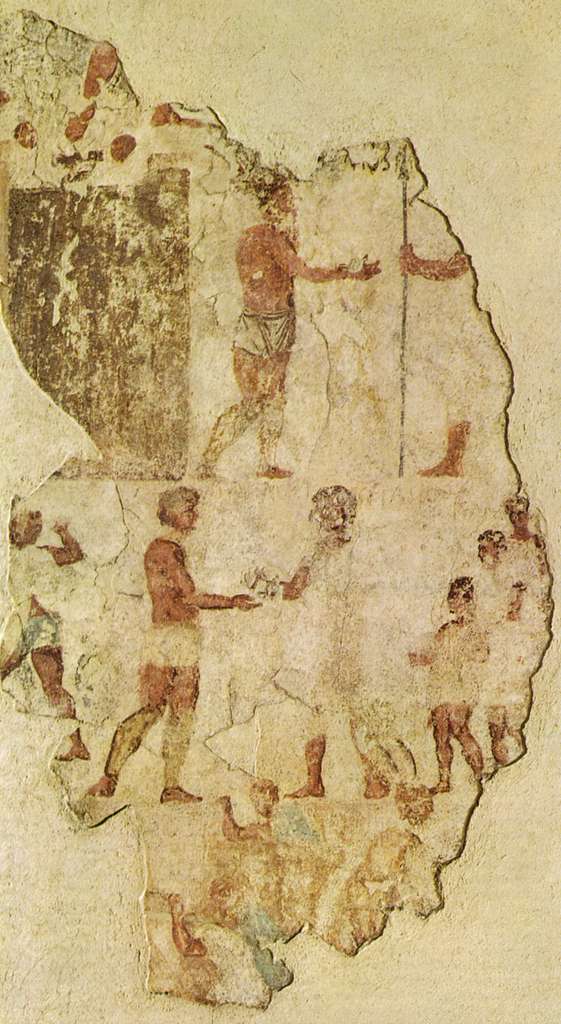
Nevertheless, the earliest surviving fragment of Roman painting is considered to be the frescoes from a tomb on the Esquiline Hill in Rome (early 3rd century BCE). The mural depicts a scene of a battle between warring tribes. It is one of the oldest examples of Roman historical painting. However, in terms of execution, they are quite primitive.
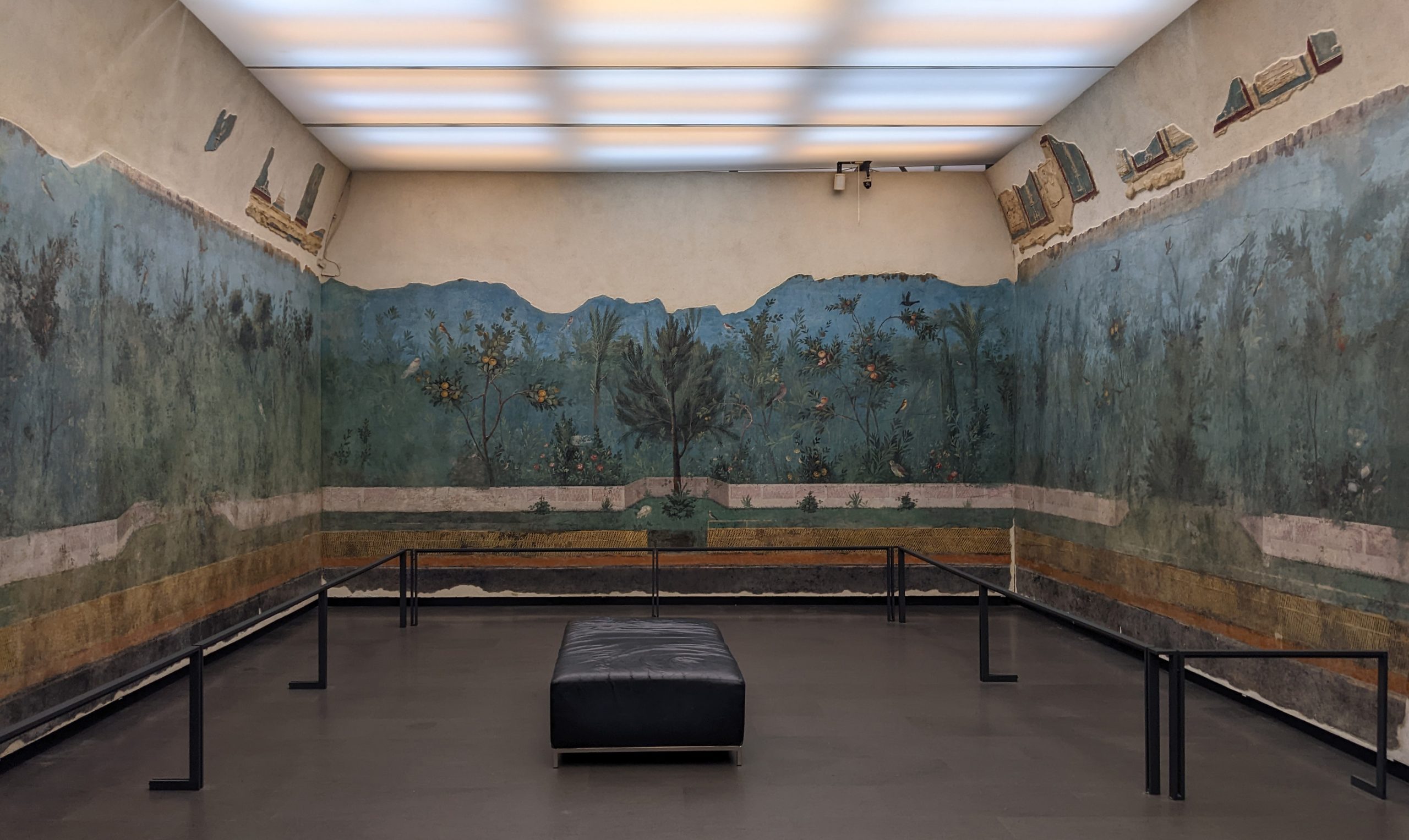
Contemporary with the Aldobrandini Wedding are the frescoes of the underground nymphaeum at the Villa of Livia, painted between 40 and 20 BCE. They depict gardens designed to create the illusion of the room’s occupants being surrounded by greenery – likely a cool retreat from the summer heat. The frescoes were executed with meticulous detail, showcasing a wide variety of plants and birds (23 species of plants and 69 species of birds), all life-sized and seamlessly painted, even around the corners without any visible seams.
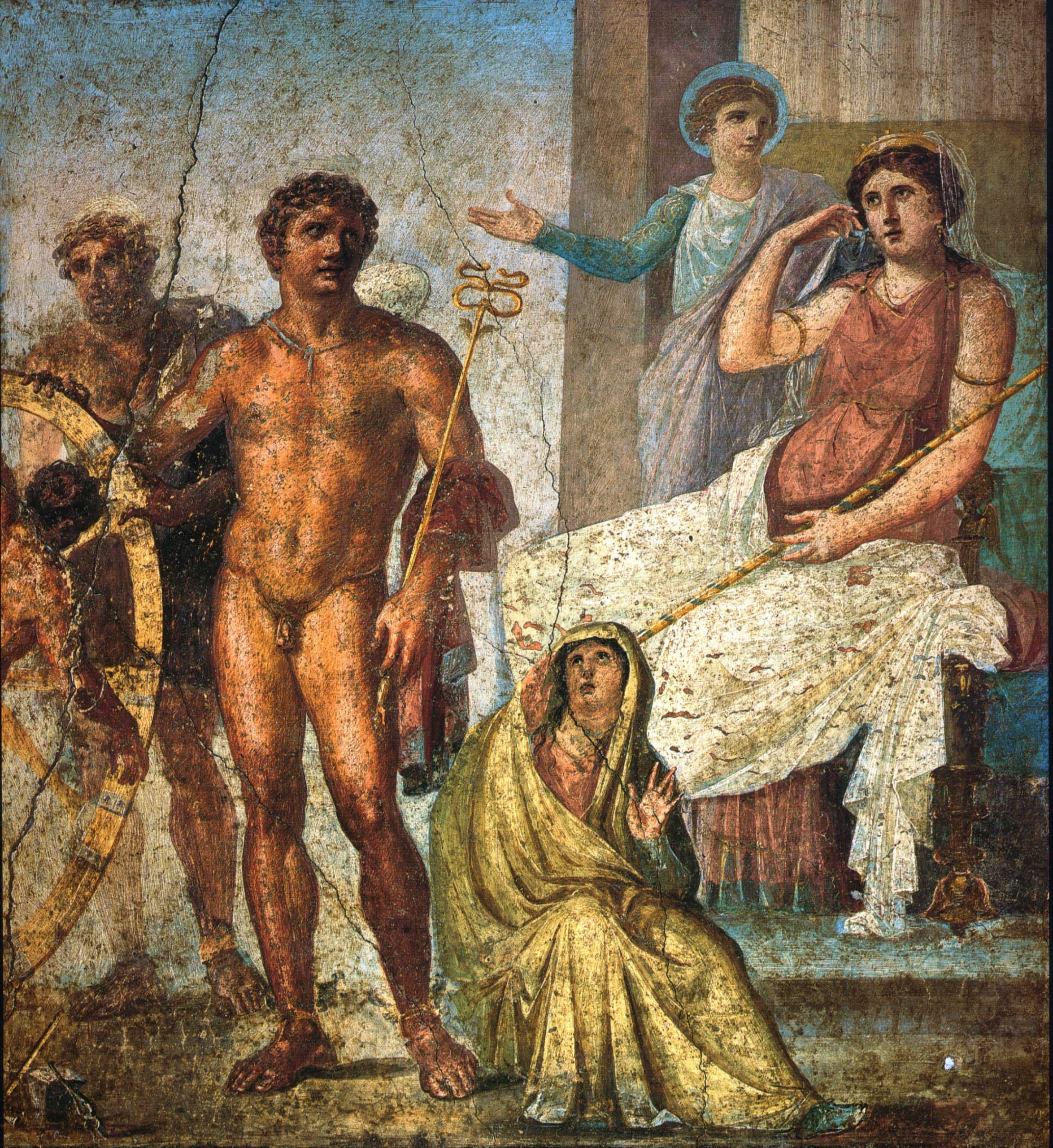
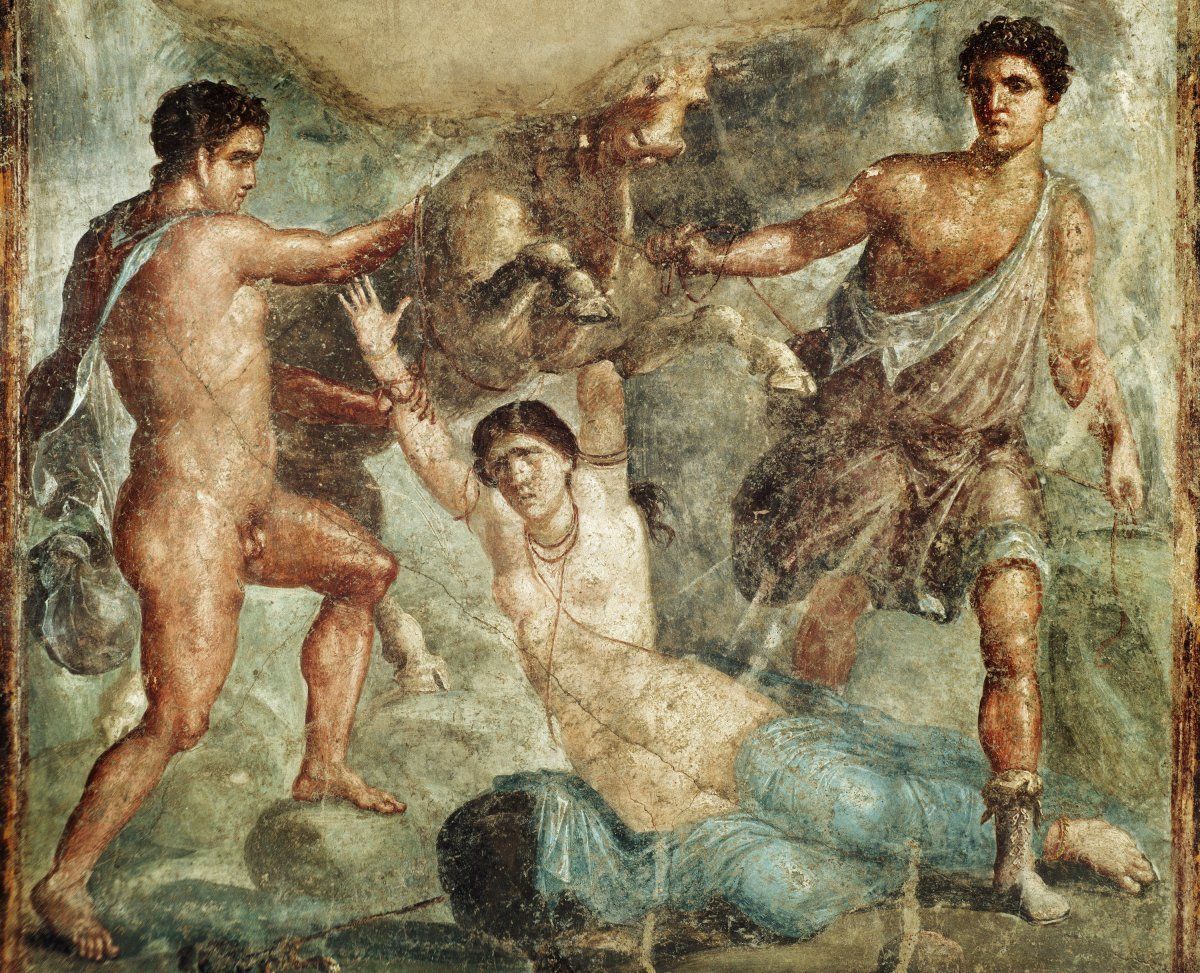
The corpus of Pompeian frescoes is a treasure trove of Ancient Roman school art, preserved after the eruption of Vesuvius buried them under volcanic ash, allowing them to survive to this day. The surviving Pompeian paintings were classified by the German scholar August Mau, who identified four distinct styles.
The First Pompeian Style dates from 150-80 BCE and shows strong Hellenistic influence. The Second Pompeian Style emerged around 100 BCE and faded by 20 CE. This style includes some of the frescoes from the legendary Villa of the Mysteries, Villa di Poppea, the House of Augustus, Casa della Farnesina, and Casa di via Graziosa. The Third Style began in the mid-1st century CE, with examples found in the Casa di Marco Lucrezio Frontone. The Fourth Style is more decorative, with notable examples from the House of the Vettii, Domus Aurea, Casa dei Dioscuri, and Casa del Menandro. This style spread after the earthquake in Pompeii in 62 CE, when many buildings required restoration.
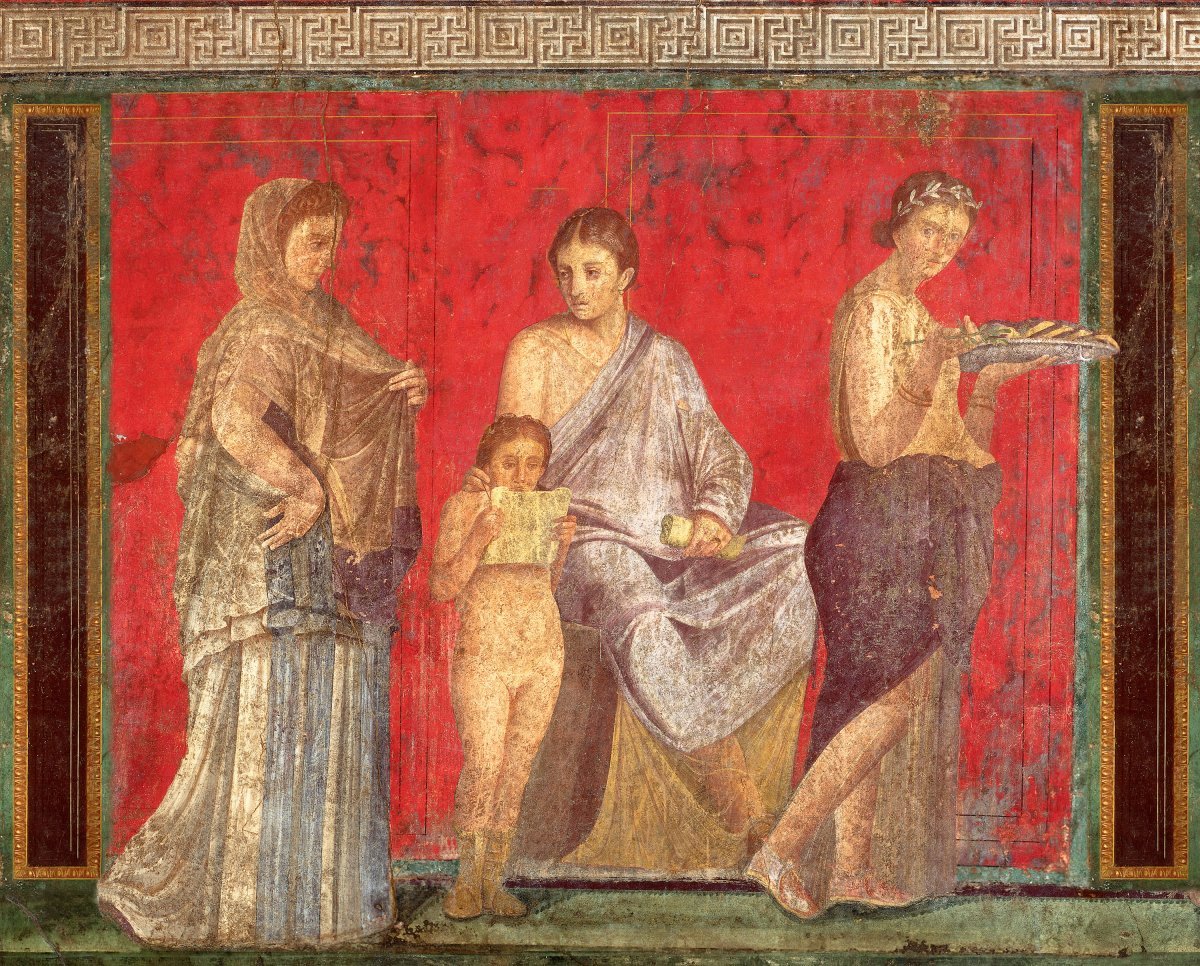
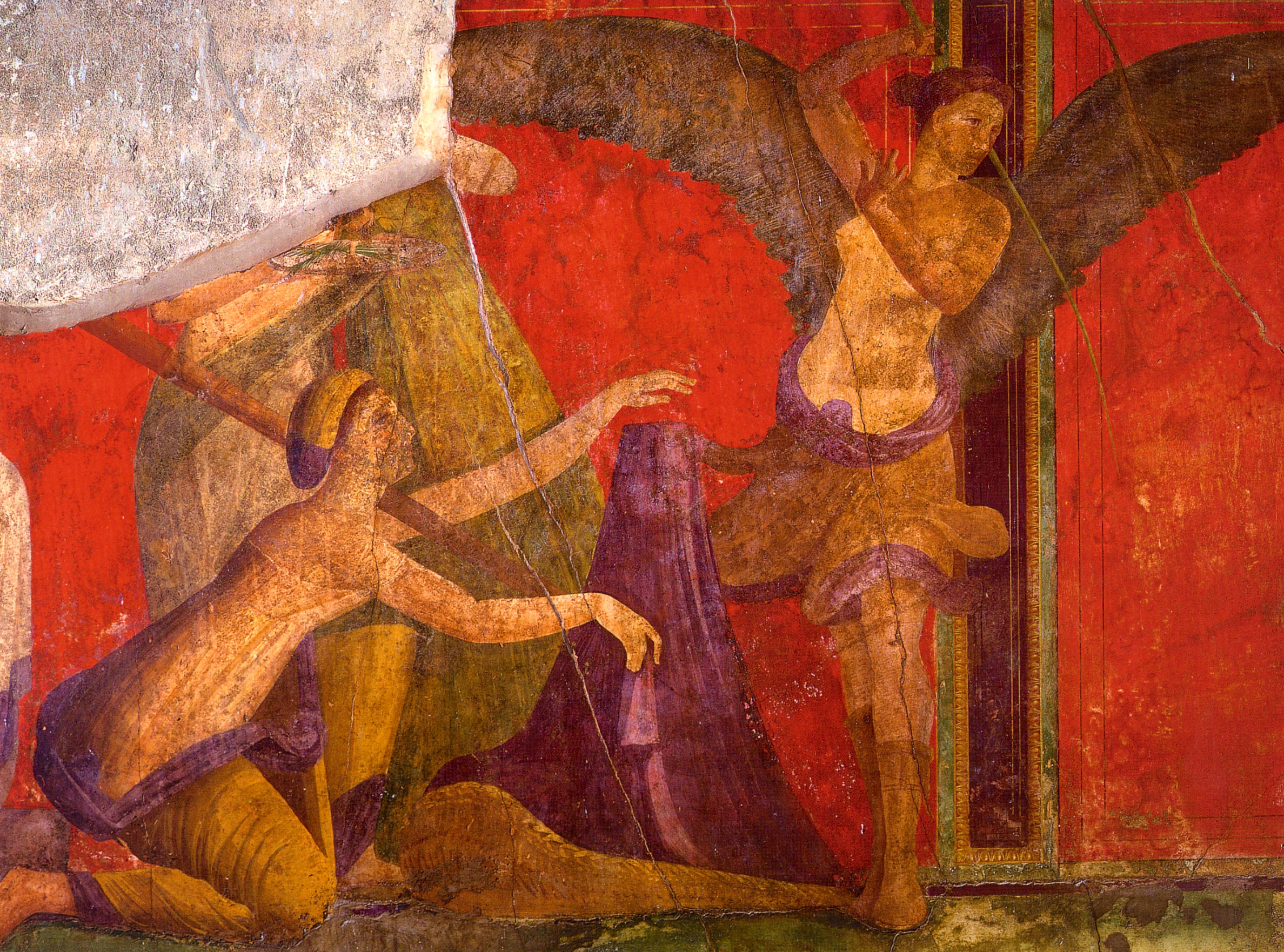
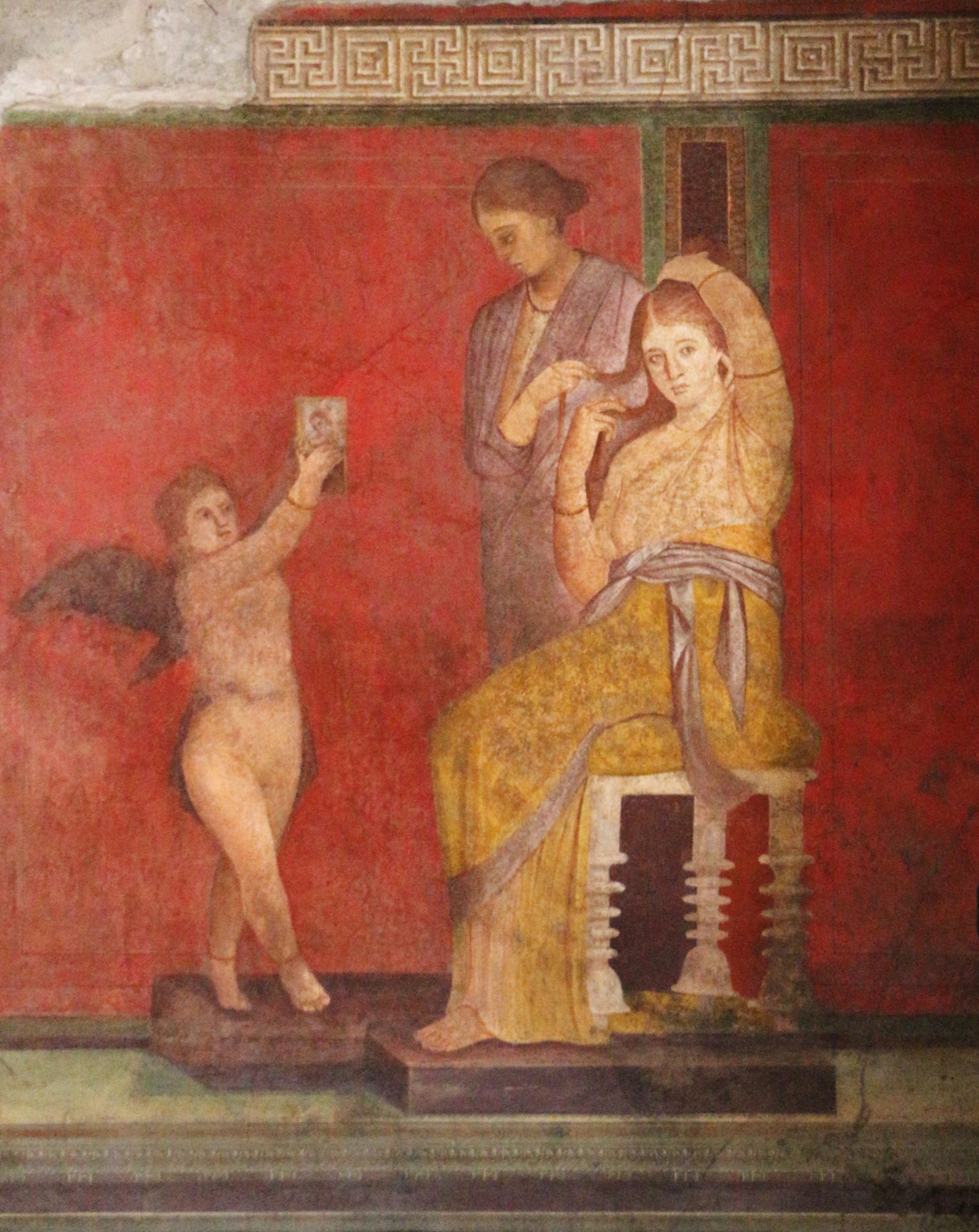
The frescoes at the Villa of the Mysteries have many interpretations, as no written sources survive to provide definitive context. However, it is certain that they depict scenes from ancient Greek mythology. To create these frescoes, cinnabar – a mercury sulfide pigment – was used. Like most mercury compounds, it is toxic. The resulting vivid red color, which dominates much of the background, later became known as “Pompeian red”. After the rediscovery of Pompeii, this color captivated Europeans and became fashionable in interiors across the Old World.
Eros holding a mirror, a winged deity (possibly Aidos – the goddess of shame, respect, modesty, and humility) – these images will later reappear in the depiction of angels in religious painting.
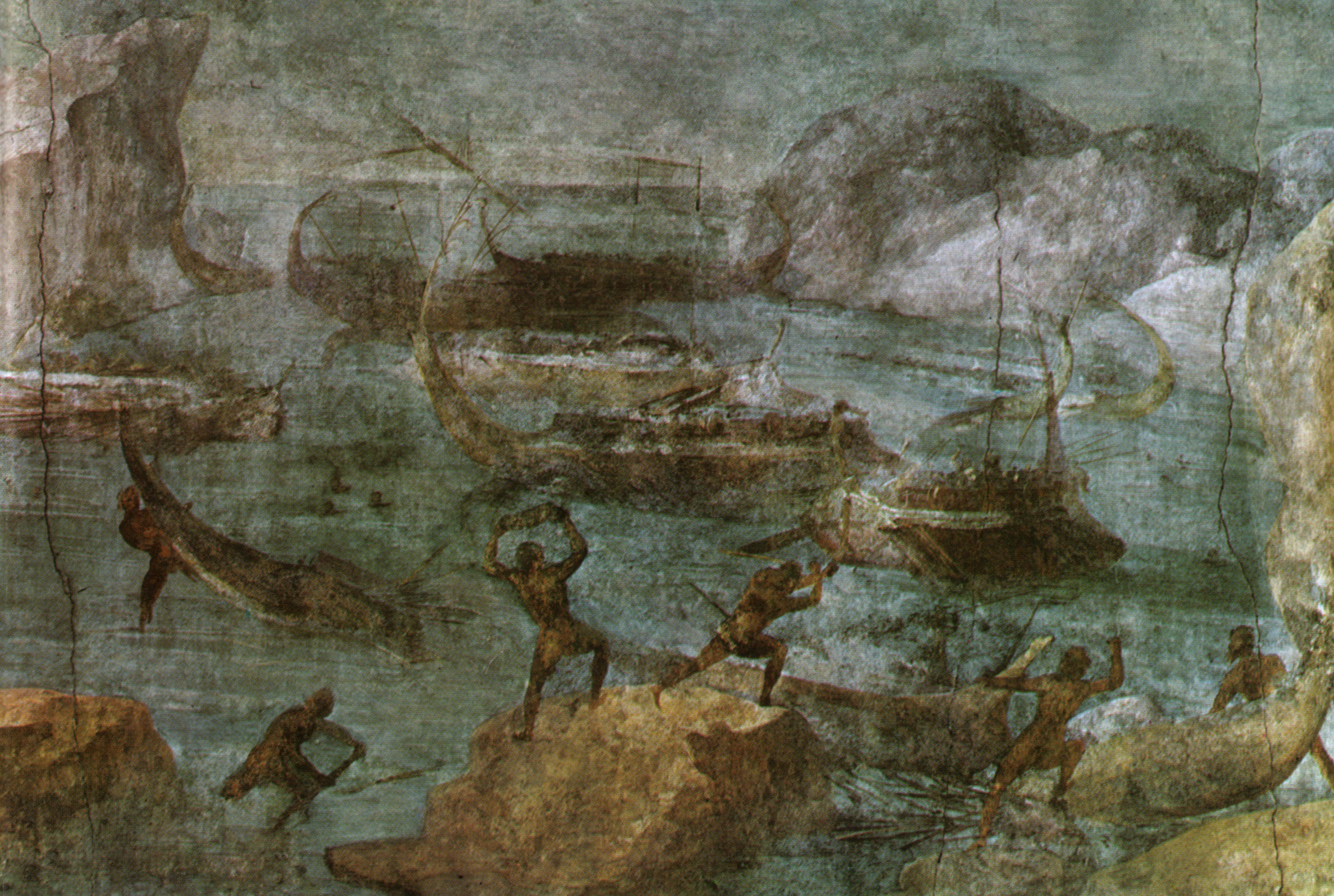
Casa di via Graziosa is renowned for its frescoes depicting scenes from the Odyssey. However, they were significantly restored in the 19th century. In these frescoes, the focus shifts away from individual heroes to a grand narrative set within a landscape, emphasizing wild nature – rocks, bays, and groves – while people and gods are simply integrated into it, much like in some later Renaissance works.
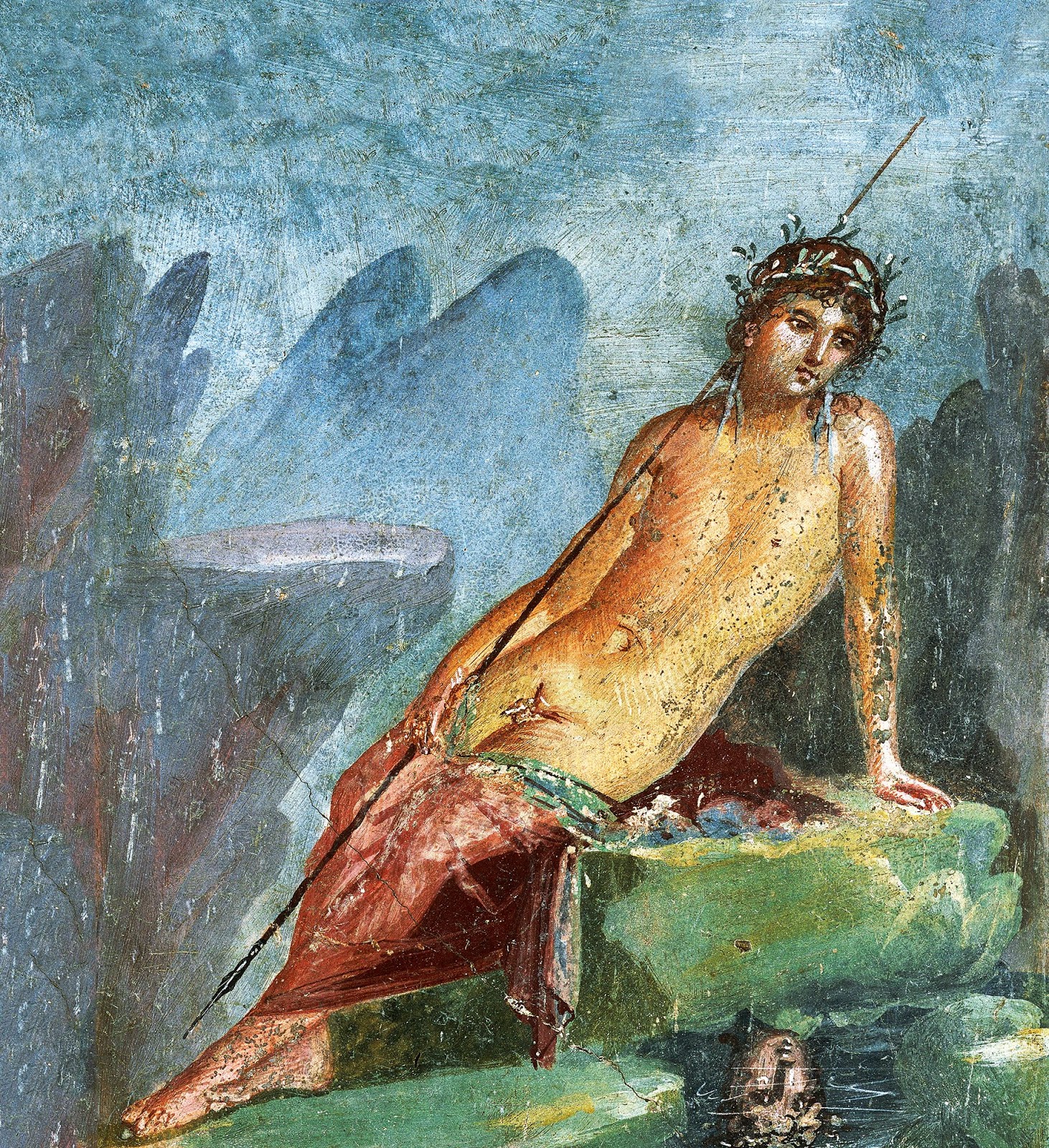
Some fascinating examples of frescoes from that period can be found in the Casa di Marco Lucrezio Frontone. For instance, the depiction of Narcissus admiring his reflection in the water is particularly noteworthy. The artist skillfully employed modeling of volumes using soft transitions of light and shadow – a technique advanced for its time – which lends the figure of Narcissus a three-dimensional quality.
The House of the Vettii is often referred to as the “Sistine Chapel of Pompeii” due to its frescoes depicting 12 scenes from myths. These works showcase a diversity and complexity of composition, a playful interaction with architecture, and attempts to convey the dynamism of the narrative.
We also have a good understanding of the portrait art of that period, as a large collection of funerary portraits was discovered in the Faiyum Oasis (now part of modern Egypt, then under Roman rule) in the late 19th century. These portraits were primarily created using the encaustic technique, mainly by Greek migrants. Most of them date from the 1st to the 3rd centuries CE. They were part of a local burial tradition modified under Greco-Roman influence: the portrait replaced the traditional funerary mask on the mummy.
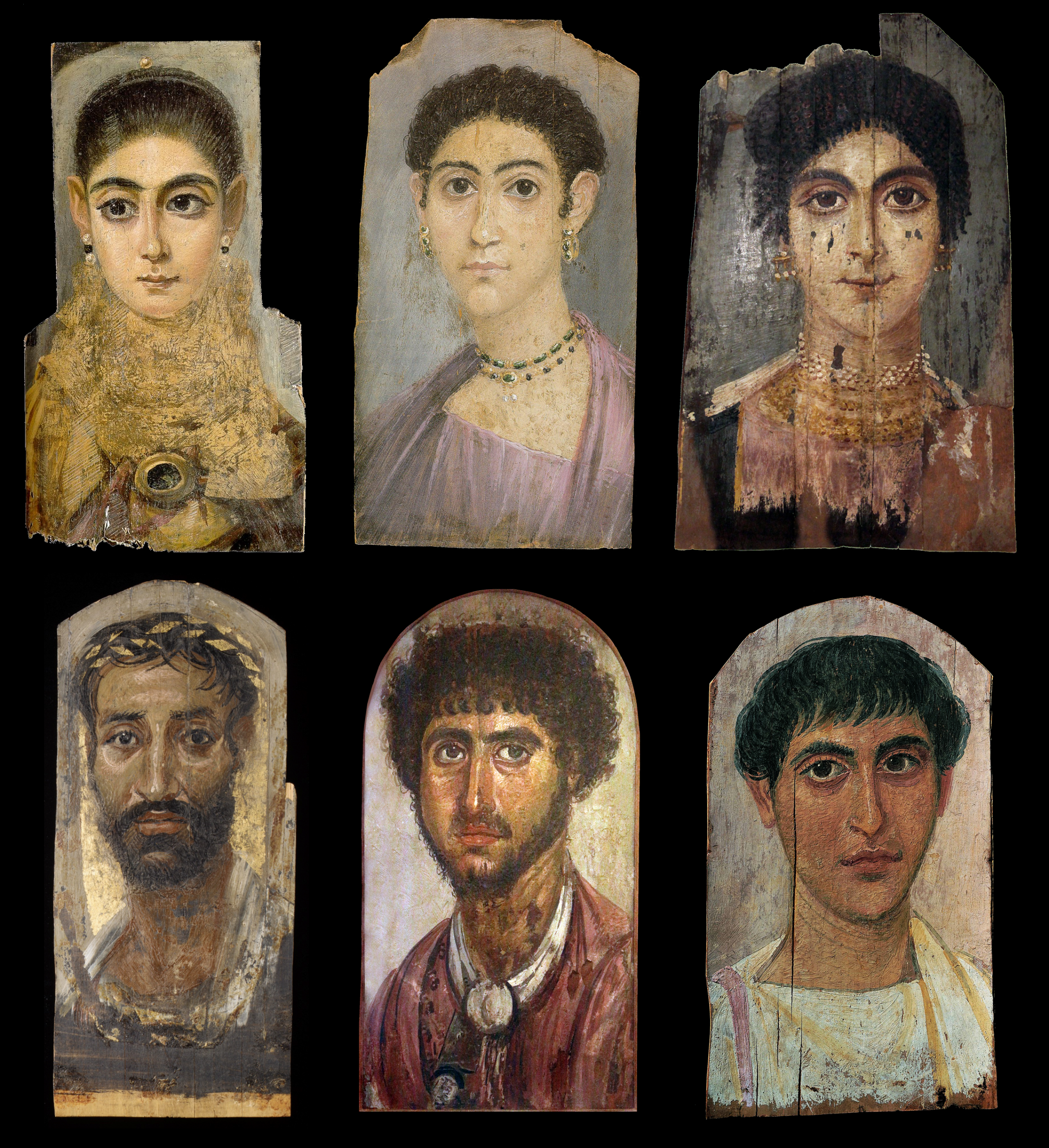
A distinctive feature of the Faiyum portraits was the use of the finest gold leaf. In some portraits, the entire background was gilded, while in others, only wreaths, headbands, or occasionally jewelry and clothing details were highlighted with gold. From the second half of the 2nd century onward, wax tempera began to dominate in these portraits. The later portraits from the 3rd to 4th centuries were painted exclusively in tempera. The portraits were typically created on wood from various local and imported species. Today, around 900 of these works have been discovered and are housed in museums and private collections. During the 3rd and 4th centuries, early Christian painting emerged, gradually replacing the Hellenistic themes.

