

 Back
Back

Paolo Veronese – “Ahasuerus Leaves the Feast and Esther Retires to Her Chambers”, 1580s. Canvas, oil. 240 x 207 cm.
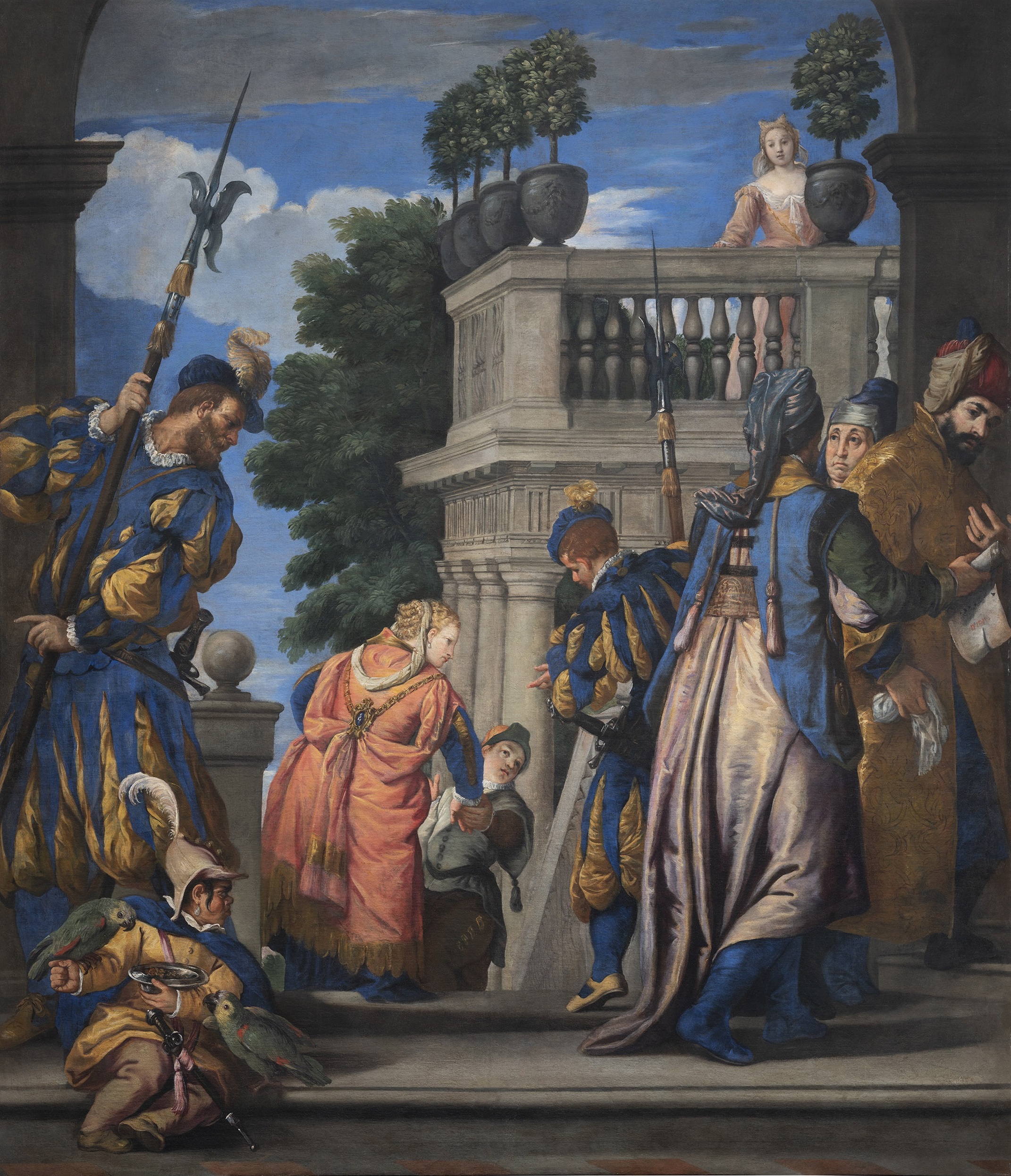
This painting was acquired by us at an auction in Austria, where it was attributed to the French artist Valentin Lefèvre. However, we immediately noticed the use of expensive Afghan lapis lazuli among the pigments. After acquiring the work, we removed the darkened varnish, revealing its colors in an entirely new light. It was clear that the painting belonged to the hand of one of the greatest artists of its time.
Irina Artemieva, an expert from the State Hermitage Museum in St. Petersburg, found a precise description of this painting in the work of Carlo Ridolfi, the principal biographer of the Venetian artist Paolo Veronese. Ridolfi describes the subjects of all seven paintings dedicated to Esther – the young Jewish woman who rose from slavery to the throne of Persia – with exceptional detail, unlike any other work by Veronese.
Research by Irina Artemieva and Alessandra Zamperini, published in the journal Ricche Minere, reveals that the patron of the series was the renowned Venetian scholar and diplomat Marcantonio Barbaro (brother of Daniele Barbaro, patron of Andrea Palladio). Barbaro acted as a co-author of Veronese, not only conceiving the theme and sequence of scenes but also participating in the painting process by transferring the designs from cartoons to canvases – a case unprecedented in the history of art.
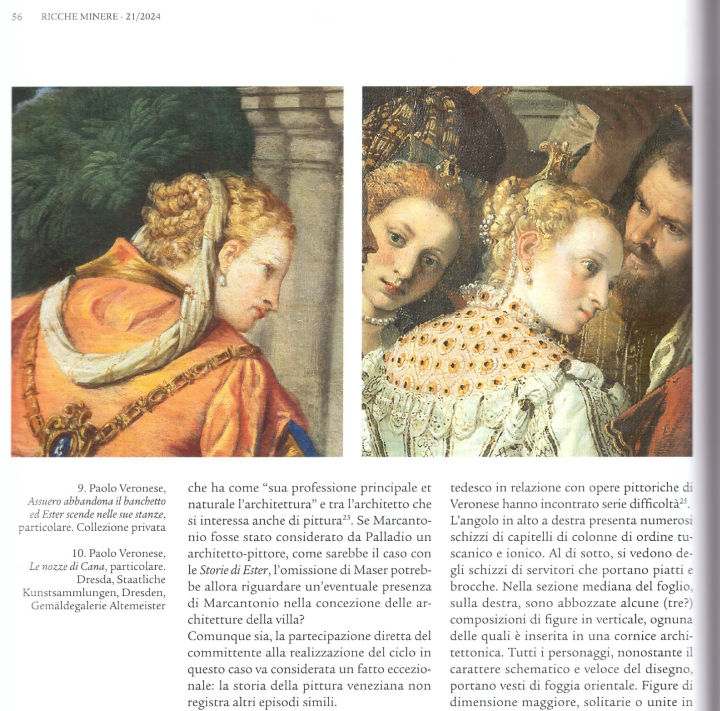
According to Michele Maccherini, the paintings were housed in Palazzo Nani on the Venetian island of Giudecca (where Cardinal Alessandro Bichi resided), and copies of them were commissioned in the 17th century by Giovanni Battista Mola and Pier Francesco Mola. The series disappeared from view in the late 18th century – the last owner of Palazzo Nani died in 1748, and the movable property was transferred to the neighboring island of San Giorgio Maggiore, where the large canvases (rolled up) were placed in the refectory (the same room where Veronese’s Wedding at Cana was displayed). After 1761, there are no further mentions of Veronese’s works. The palace itself was demolished by 1765.
The rediscovery of this painting is a significant contribution to the history of the Renaissance and Venetian art.

