

 Back
Back

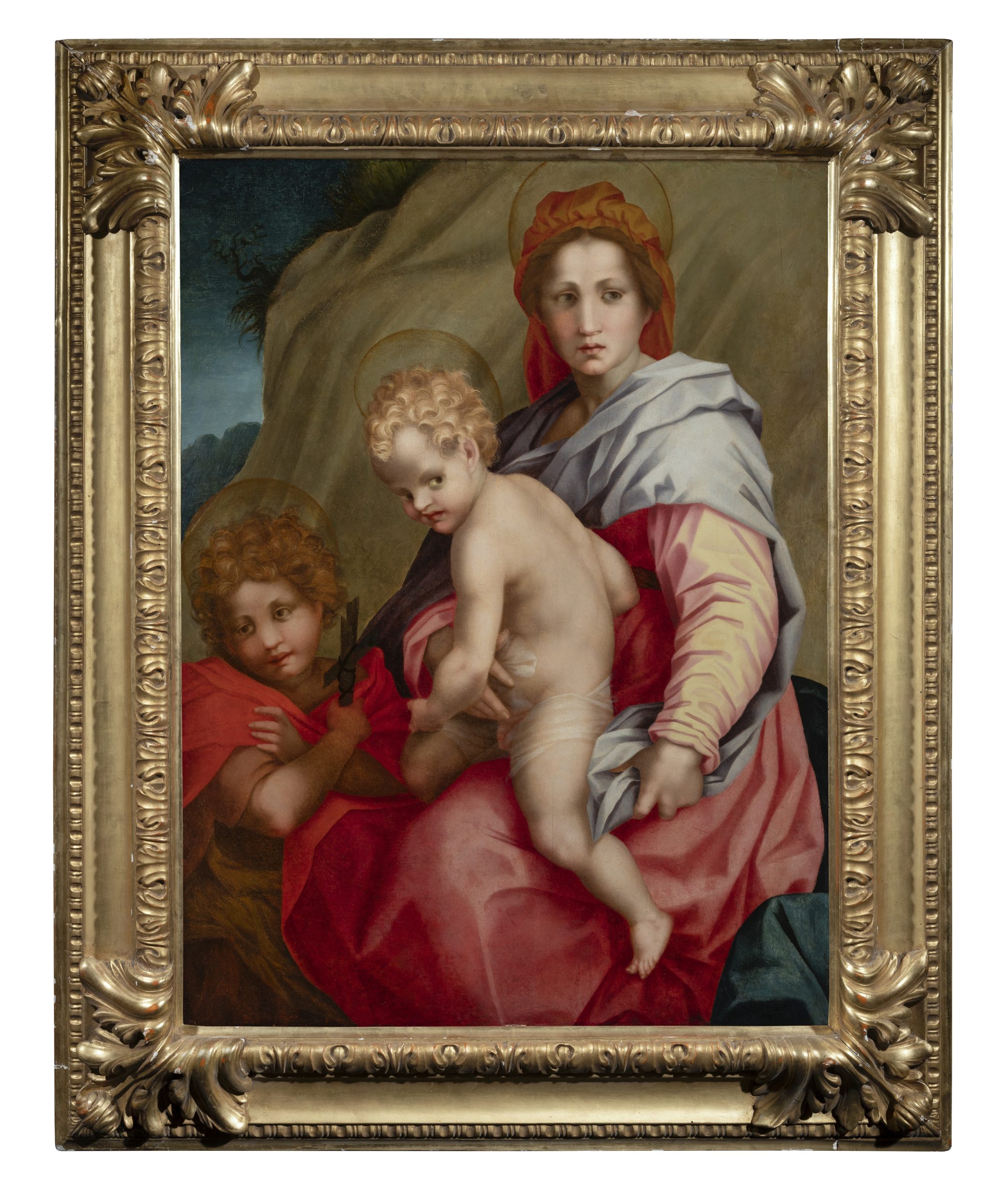
In 2021, we acquired a painting of exceptional artistic quality, depicting the Madonna and Child with Saint John the Baptist in a style characteristic of the Mannerist period. Research into archival records enabled Irina Artemieva, Senior Research Fellow in the Department of Western European Fine Art at the State Hermitage Museum and Doctor of Art History, to establish that the painting entered the Hermitage collection in 1779 as part of the collection of the British consul in Venice, John Udny, where it was recorded as an original work by Andrea del Sarto. This collection of sixty paintings was acquired by order of Catherine II, Empress of Russia. According to Artemieva’s attributional expertise, however, the true author of the painting is Jacopo Carucci, known as Pontormo.
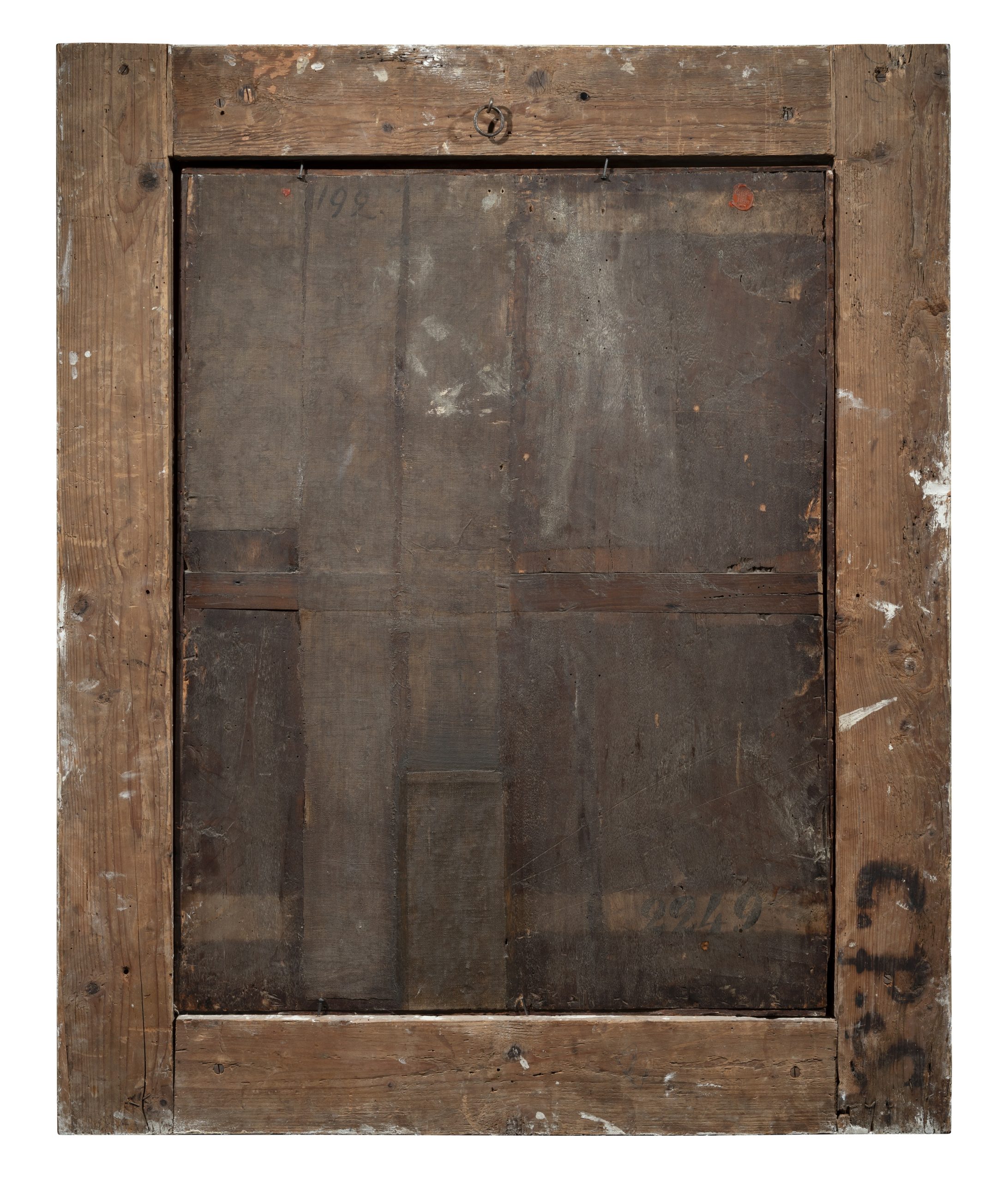
In 1797, a red wax seal bearing the monogram “PP” beneath a crown was affixed to the reverse of the painting, while the number 645 was inscribed in red paint at the lower edge of the recto; this number has not survived. When the Inventory of Paintings and Ceiling Paintings under the Administration of the Second Department of the Imperial Hermitage, 1859 was compiled, the painting was entered in the third volume of the inventory. The number 2249, under which the painting appears in that inventory and which was written in black paint on the reverse, has been preserved.
John Udny, born in 1727, came from the Scottish nobility. In 1757, he arrived in Venice as an independent merchant and soon became the right-hand man of the ageing Consul Smith, who recommended his young associate as his successor to the post of British consul in Venice. Throughout his Italian career, Udny was one of the most successful and astute dealers in paintings, acquiring works from the increasingly impoverished Venetian and Tuscan aristocracy, and competing with such well-known figures as Thomas Jenkins and James Byres.
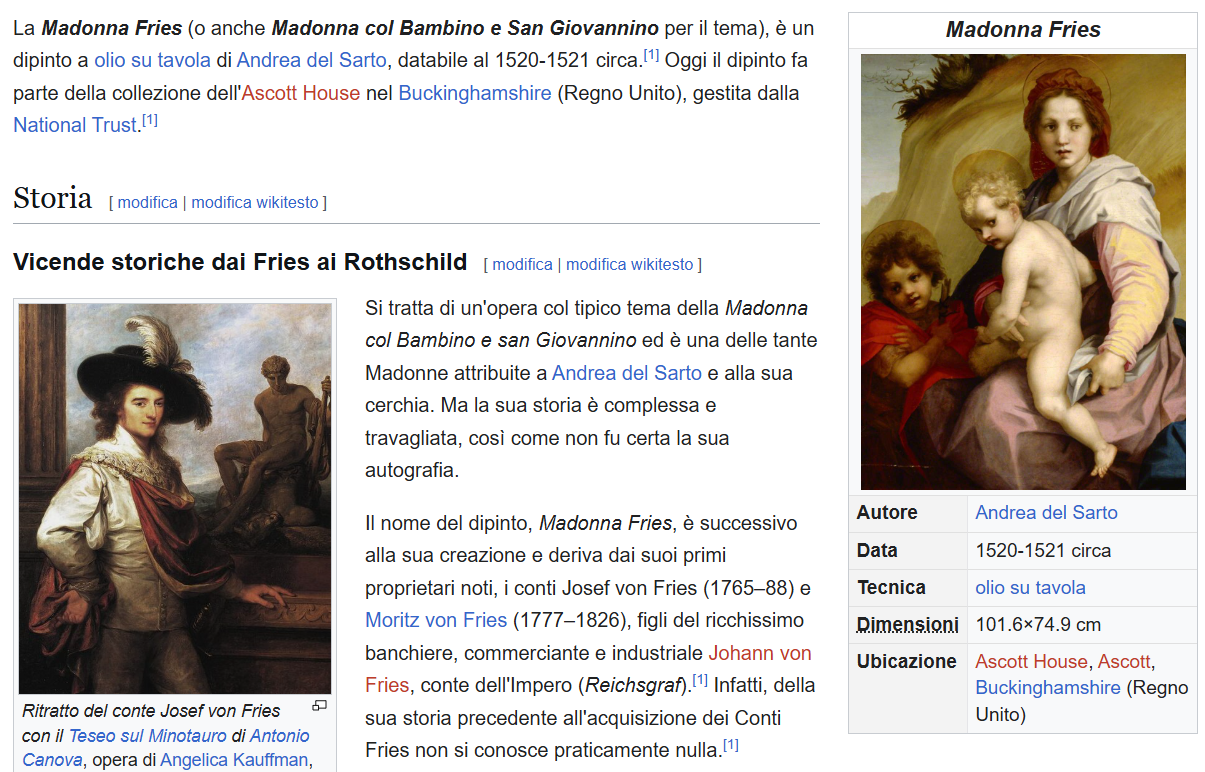
It is most likely that Madonna and Child with Saint John the Baptist was acquired by Udny in Tuscany before 1768, when the consul presented Catherine II with a list of sixty-two paintings, since Venetian collections were composed predominantly of works of the local school. The attribution to Andrea del Sarto may have rested on historical information known to Udny but no longer extant. Yet only a few years after John Udny’s collection entered the Hermitage, between 1785 and 1787, Count Joseph von Fries (1765–1788) acquired in Rome an identical composition, likewise attributed to Andrea del Sarto. Its earlier history prior to the sale is also unknown, although the acquisition itself caused considerable excitement and drew widespread attention to the painting.
The “Fries” Madonna was frequently copied both in the sixteenth century and in later periods. After analysing images of all currently traceable copies, they may be divided visually into two types. One type corresponds to the Fries Madonna, recognised as a work by del Sarto; the other type repeats the painting under discussion here. The copies after the Fries Madonna show the landscape in daylight. The copies after our painting depict a nocturnal landscape. In the copies after the accepted work by del Sarto, the Madonna’s garments are rendered in pale pink, light grey, and blue. In the copies after the version examined here, her clothing is bright red, vivid grey, and ultramarine.
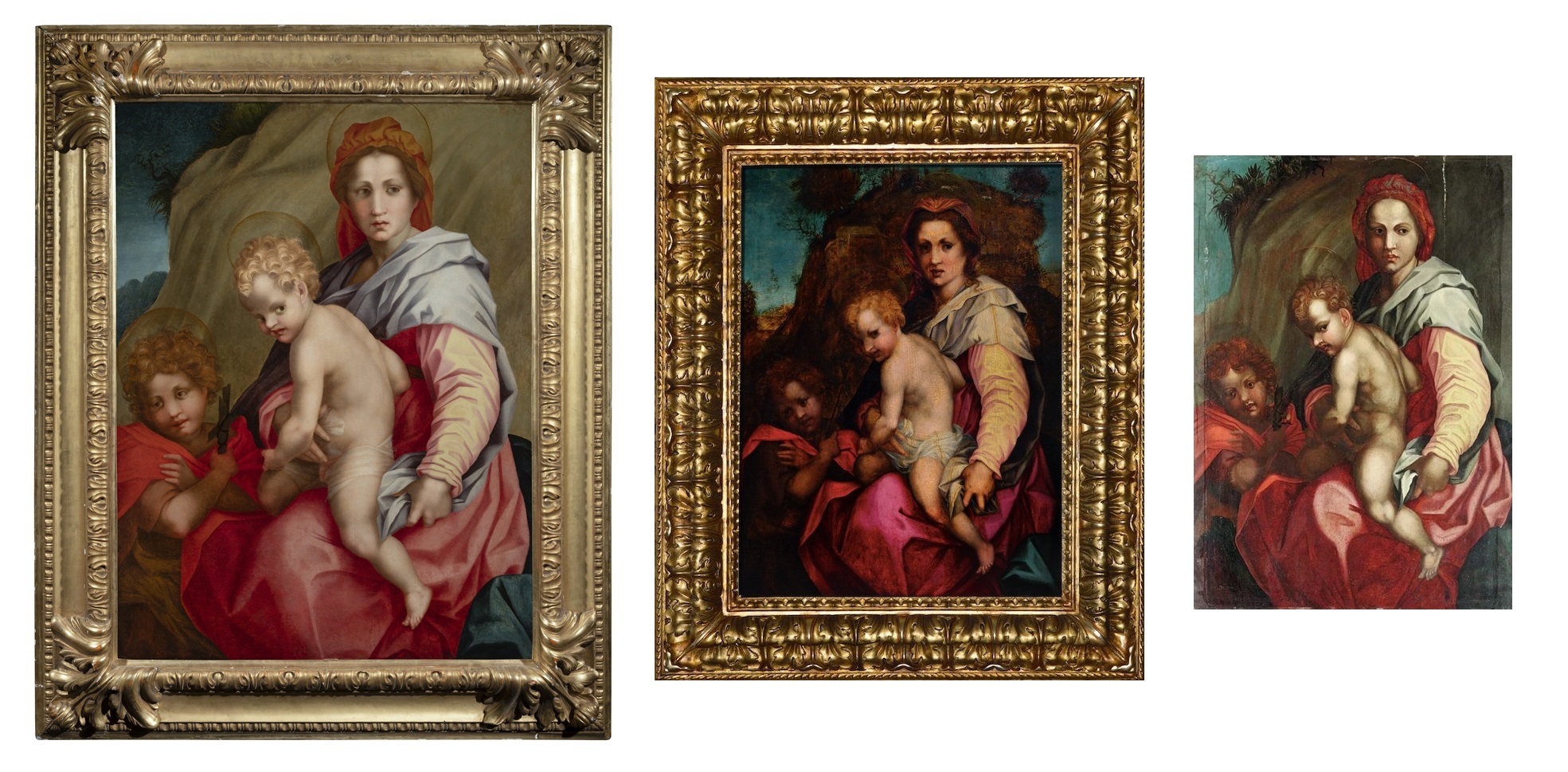
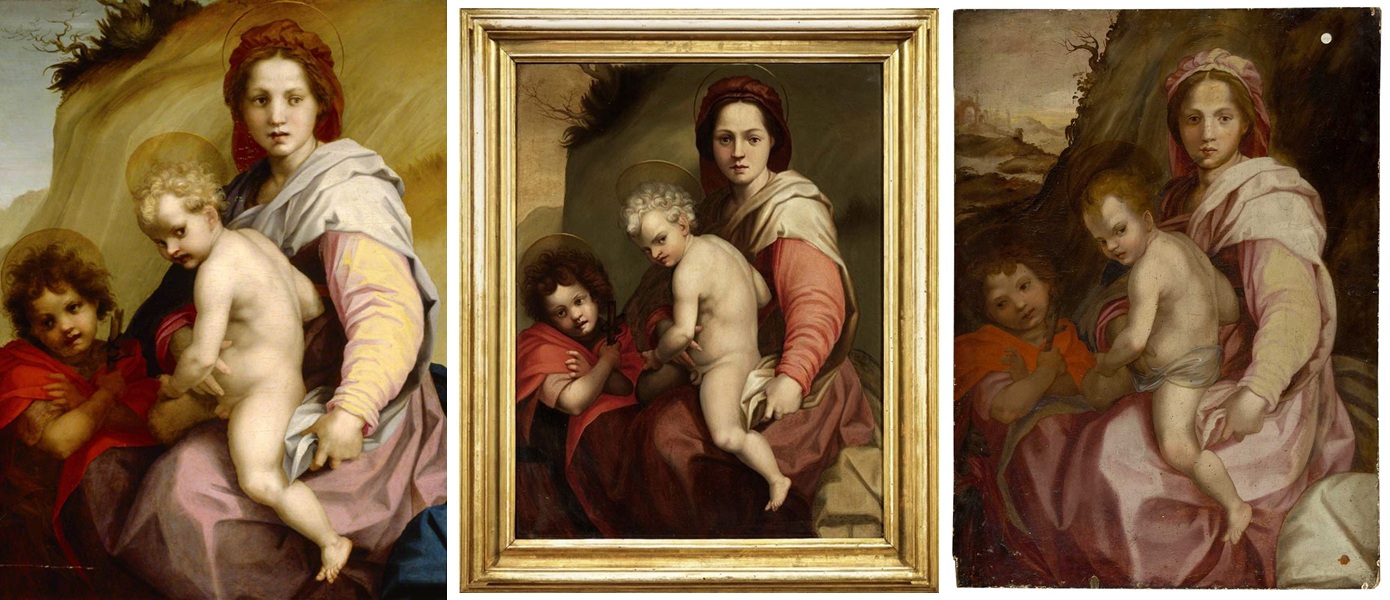
The faces of the figures also differ noticeably. In the copies after the nocturnal version, they are more distinctly Mannerist in character. This indicates that both prototypes were highly valued and revered as originals.

